


The silent and restless figurative wisdom
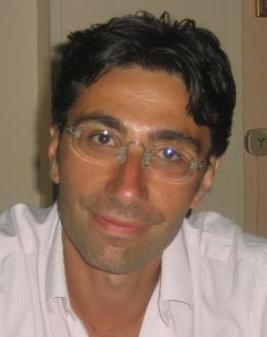 At first, I could not fully understand the requirements that a critical assessment of Giuseppe Siniscalchi’s works would have implied. I thought that they were simply nice paintings, made by a sensitive and careful person. I discovered only later which broad philological study was necessary to prepare spiritually for this art. For me, after many years of academic work in the field, it was as starting everything anew, in a return to a certainly happier childhood. I was expecting to carry out a cultural duty, and instead found out that I was receiving a spiritual benefit: a new key to read the world and human life. To fully understand Siniscalchi’s work we must first of all remember that he is, I would say, an artist that only lately discovered his talent, being able to apply the analytical precision of his main field of activity (law) into his artistic activity. Siniscalchi waited for a long time before choosing to make his production public, such that all the pieces of the puzzle could be ready for the audience right from the beginning.
This necessity of visual and cultural synthesis leads the artist to not neglige the back of the canvas, often depicting a verbal subject that lights up the curiosity of who is looking at the painting, which becomes an object-work. The word “Backandfrontism” to describe this discovery is a wonderful choice, because it already has the potential to become the basis of a new cultural movement. The interaction between the front and the back of the canvas brings the work of art beyond the limits of the traditional frame, thus inviting us to look for the beauty and thruth that is not on the surface.
His attempt in art is comparable to what was attempted by Marsilio Ficino and his Accademia Neoplatonica, in the Renaissance, at the court of Lorenzo il Magnifico in Florence. While they searched for a harmonization of the pagan and Christian worlds, here the link is between the Western and the Eastern tradition. In paintings as “Dawn on the lake” or “Dawn on the mountain”, although the artist was in his twenties, we are already able to find a complete expressivity, with all the characters that will form his linguistic koiné. In perfectly serene landscapes, a small figure, probably the artist himself but as a symbol of humanity at large, appears firstly on a side and then in the centre of the canvas, in a slow acquaintance with the cosmos, always in religious respect. Nature becomes the central element in the works of Siniscalchi, developing from an initial conflicting representation (with prevalence of red tones menacing the travel of the human sail) towards reconciliation (with prevalence of blue tones, in starry skies or blue seas, reminiscent of Van Gogh and Monet). Metaphysical landscapes are here to be deemed as the loci that call for the deepest contemplation to reveal the mystery of everything. They relieve us from the secular world and bring us in an essential travel towards the sun at the horizon. The eternal dimension of those symbols is the strongest poetic force of our artist. For example his “Wa-Sun”, with its concentric irradiations of light and energy, signifies peace and solidarity, in a wonderful meeting of Western and Eastern philosophies. What in Van Gogh was struggle, fragility and drama is here stillness and eternity. The mysterious Wa Moon (for example in “Signs of peace”) spreads its light in the womb of the night in such a soft way, that in the end it flows into it, and there is no coming back. At the end of this short course, we would identify “Cross and Wa in the sunset” as the synthesis of Siniscalchi’s research. The concavity of the valley becomes the sweetest cradle where the sun sets, lighting the humility of a domestic dwelling. Here as in many other of his paintings, Siniscalchi has broken the boundaries of the frame by painting the whole canvas, also on the side and back. We have chosen only some examples, however words cannot express the whole world of feelings that the works of Giuseppe Siniscalchi enclose, nor should they. We have thus only tried to carry our duty of cultural divulgation, leaving the rest to direct contemplation.